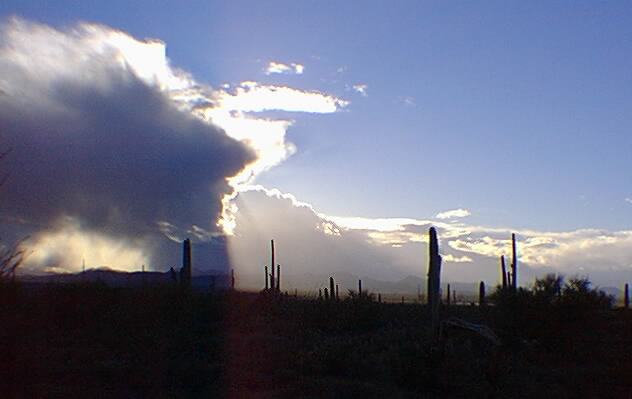
The sun has begun its transit and I think its gone far enough now that I can put a hummingbird feeder back on the front window. When I removed it at the beginning of the summer a resident Annas made his displeasure indisputably clear, hovering at that window and at the kitchen window. Yeah, around the corner at the kitchen window! Made me chuckle. Someday, when somebody compares the brains of birds I think hummingbirds will be near the top. Doves will be at the bottom. Ring-necked turtle doves will be in the basement.

Migration of the rufous hummingbirds on their way to Mexico seems to have finished. I haven't seen any for several days now, tho its possible a youngster or two could still straggle thru. I've seen more juveniles this year than usual. It's really hard to identify the juveniles, well, except for the Annas which are easy to spot.
Things were getting contentious out back for a while there. The rufous are smaller than the other hummingbirds in this area but they're like the chiahuahua who thinks he's a lion. There are two hummingbird feeders in back, one by my bedroom window and one in the mesquite tree. A resident Annas male who sets up his guard post in the mesquite was going nuts trying to run all the little rufous off. It was like an endless series of dog-fights out there with bright pink and orange flashes flying thru the air. Actually, he's not crazy about sharing with anybody but I have seen female Annas at the feeder so perhaps they've worked something out....
When we installed the Hummingbird enclosure at the Desert Museum the aggressive little rufous had to be housed in their own niche so all the other hummers could live in peace.
Earlier in the summer I had to rethink the way I was feeding birds in the backyard. It all started the day I saw two ring-necked turtle doves sitting on the back wall. They're larger than the white-wing and mourning doves I typically see and really pretty.

Ring-necked turtle dove
I wanted to keep them around so, not knowing what they liked, I put out an open feeder with a mixture of regular seeds and sunflower seeds. Pretty soon every darn bird in the neighborhood was at that feeder before the turtle doves even showed up. For a while I just refilled the tray and managed to cover the times they showed up so they stayed around. I was filling the thing three times a day and those little house finches were feasting like mad. I swear they were multiplying exponentially! 
House finch male/female
The black-throated sparrows, which usually equaled the finches in number, must not reproduce so quickly because their population stayed pretty much the same.

Female left, Male right
The fussing and fighting going on around that feeder got to be downright obnoxious. So, I thought if I eliminated the small seeds and just used sunflower seeds that would cover the turtle doves and cardinals and maybe the house finches would go away. Wrong. They're finches - you know, nice beaks for cracking seeds open. Didn't matter that the sunflower seeds were huge compared with the other seeds, they loved them. So I put the sunflower seeds in an enclosed feeder to slow them down. But the turtle doves couldn't figure out how to get at the sunflower seeds in that feeder and the finches were as dogged as ever. The three turtle doves just sat on the wall watching the finches swarm the thing - it like a bee hive on the move. By now there were three turtle doves, one looking like a juvenile but it wasn't nesting time. Maybe turtle doves don't know about those rules and breed like finches - constantly. Or maybe it was a female (?), it wasn't as attractive as the other two.
Needless to say the "bird problem" was getting expensive and I had to do something drastic, short of murdering all the finches. So I removed the tray and the enclosed feeder and got a quail block to supplement the smaller caged block hanging in the tree. Don't know what they stick those blocks together with but the birds have to work at it to get the seeds loose. Well, that did the trick. Sadly, the first to disappear were the turtle doves. When winter gets here (if it gets here) I'm going to block all those little hidee holes under the tiles on the roof. Then maybe next year I'll have fewer house finches and perhaps the turtle doves will show up again.
Meanwhile, the feeding action has changed some. Cactus wrens have moved in. The theory is that a vacuum in an ecosystem will be filled by something else, which was not my intention, but that's what happened.

Cactus wren
Cactus wren. Arizona state bird. Builds its nest in the thorny cholla cactus. Shrewish, obstreperous, cactus wren. When it comes to pecking order they seem to be at the top around here. They swarm in on the hanging block and the house finches flee. This morning I saw one drive off a female cardinal, a larger bird but perhaps no match for the nasty beak of the cactus wren.
They're interesting to watch tho. Some of them remind me of kids making a running jump into a swiming pool. They run along the wall then launch themselves into the air and down to the feeder (which is now by my bedroom window). There are some juveniles in the crowd who haven't gotten the cage enclosing the block figured out yet so they're patiently fed by the adults. The other day I watched as a young one jumped on the back of an adult then up to the top of the cage. Cooperation or coincidence? The adult was bent over, not feeding. It seemed to be making a "platform" for the younger bird.
Last year I had a bit of a problem with Gila woodpeckers. They're fond of the mesquite and tho they don't drill any holes in the tree they love to hide special morsels in tight spaces created by its branches.

Bad woodpecker!!
They also love to drink from the hummingbird feeders. I tried scaring them away by opening the back door (which doesn't bother the hummers) every time they "landed" on a feeder but it didn't really seem to help. This year they show up from time to time but they aren't depriving the hummers like they did last year so I've just left them alone. And no, I'm not foolish enough to believe my intervention changed their habits one bit!
One of the least problematic of the birds in my yard are the Gambels Quail.

Male top, Female below
Their visits are predictable - twice a day, once around 9:30 am and once around 3:00 pm. If Jack and I are outside I usually hear the male calling before he pops up on the back wall so I hustle Jack into the house, find my binoculars and settle down by the bedroom window. The seed block is across the yard in the shade of the mesquite. Next to it is the large dish of water, well, actually its the catch basin for the largest planter I could find.
This year I'm seeing something I've never seen before. My visitors look like a "blended" family - one male, two females and more juveniles than I've ever seen survive a summer before. Normally the little quail parades that begin after the birth of the chicks dwindle until only the two adults are left. The male does the usual guarding behavior from the wall most of the time but he comes down briefly for his share of food and water as well.

Meanwhile, the two females and all the juveniles (10) peck at the block, drink their fill, nose through the detritus under the tree then settle down in the shade of the wall until its time to leave. I'm happy to see the young surviving so long but I have to wonder what has happened to their predators.
Lesser goldfinches are also a pleasure to have around. I used to feed them with the feed socks (below) but this year the glut of house wrens started trying to get at the tiny thistle seeds and made holes in the socks. And of course they drove the lesser goldfinches off.
 I
I I solved that by putting the seed in tubular plastic feeders. The perches are shorter and the holes smaller than ordinary feeders, but it didn't take the house wrens long to figure out how to hold on and they spend a fair amount of time working away at the holes. Can't tell if they're successful or not. They keep going back but I don't know if thats because they are marginally successful or they're just stupid. Fortunately, they have more success with the seed blocks so the little goldfinches have a chance at a meal again.
While the Curve-billed thrasher was an occasional visitor last year, they show up every day this year. They don't cause any trouble, just take what they want and leave. Now that I think of it I've not noticed house wrens there when the thrashers are feeding.
Don't know if it will show in the picture but they have spooky orange eyes.

That's not a bad thing. Makes it easier for beginners to identify yet another basically blah desert bird. They seem to enjoy the caged block, which is fine with me because I get a nice close look.
And then there's the roadrunner, or the Greater Roadrunner. I suppose there must be a lesser one running around somewhere but I have nothing to contribute on that subject. We have a fair number of roadrunners here, which surprised me because of all the houses. But, since we're surrounded by desert maybe they see all the water here as some sort of oasis.

Every afternoon (if I'm looking) I see a roadrunner hop up on the front wall, then down and over to the water, then up into the tree where it moves around a bit, sits a bit, then jumps down to the back wall and leaves. The tree business is new but since I can't distinguish male from female, and knowing the females nest in trees, I'm hoping my visitor is a female checking out the accommodations for next season. That'd be ok with me as long as she doesn't take my branch!
Guess things will quiet down now until the next migration. The Swainsons hawks migrate thru in late September and I hope I'll see some of them. When we lived out in Avra Valley there was no way to miss them. It was very rural out there, mostly cotton, and they came in such masses they lined up on barbed-wire fences, perched on fence posts,in cottonwoods, they even sat on the ground. I passed them in the morning on the little two lane road that took me work. In the evening I'd pull my truck over and just sit watching them. It was massively impressive. I was enchanted for a couple of days and even managed to find a tail feather one evening after they'd left. Of course at the time I didn't realize they were gone, tho the lack of birds should have told me something :)
Note: all photos above are from the internet


